
The liver is the largest internal organ and has the remarkable ability to regenerate. We study how immune cells in the liver microenvironment contribute to disease pathogenesis.
We work with explanted livers from donors that undergo life-saving surgery at the Queen Elizabeth hospital. Our patients’ livers have failed due to autoimmune disorders, viral infections, dietary injury such as a fatty diet or alcohol abuse, or other rarer abnormalities.
We discovered a new biological process termed “enclysis” where liver cells enclose and lyse (destroy) live regulatory T cells (Treg), which are the cells that control inflammation. By targeting enclysis, we aim to develop new therapies for liver diseases.
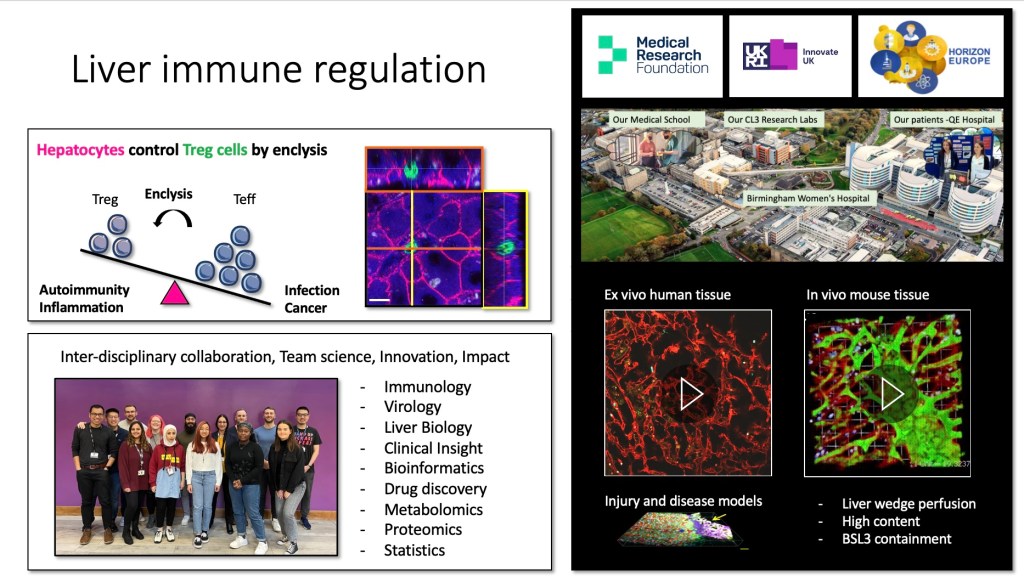
Tissues from donated livers reach our lab fast after surgery, preserving the cellular and humoral microenvironment. We build ex vivo models that will help us understand the mechanisms of liver inflammation, to identify new targets for therapeutic interventions.
Please click here to read more about our work on liver immunology or virus transmission to liver cells using immune cells as vectors.
 Stamataki Lab